
Help! My Dog Got Sprayed by a Skunk — Now What?
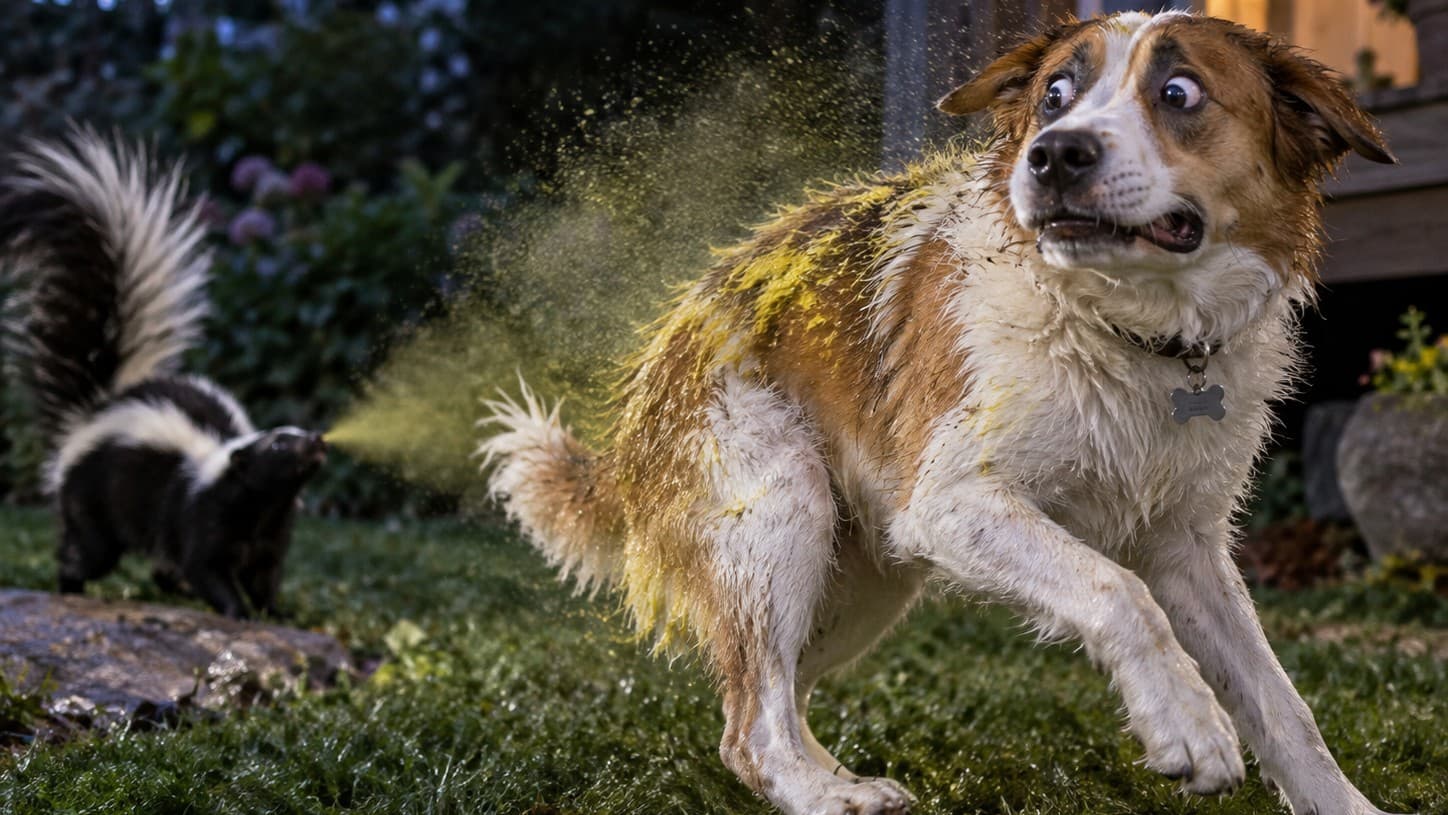
If your dog just came barreling back from the yard smelling like burnt rubber and rotten eggs, you already know: they met a skunk. Here’s exactly what to do, in order.
Step 1: Check for Physical Injury First
Before worrying about the smell, look your dog over. Skunks sometimes scratch or bite during an encounter. Check for:
Puncture wounds or scratches Excessive drooling Signs of pawing at the face or eyes
Skunk spray directly in the eyes can cause temporary blindness, intense tearing, and pawing at the face. If this happens, flush the eyes gently with cool, clean water or a sterile saline eye wash, and call your vet — this warrants a same-day check, especially if your dog won’t stop pawing at their eyes or the redness doesn’t settle within a few hours.
Step 2: Don’t Bring Them Straight Inside
Leave your dog in a garage, mudroom, or outdoor area (weather permitting) while you prepare your cleaning supplies. The oil-based compounds in skunk spray (called thiols) cling to fur, skin, and anything they touch — including your couch.
Step 3: Skip the Tomato Juice
It’s a myth. Tomato juice mostly just masks the smell with another strong smell temporarily, it doesn’t neutralize the thiols.
Here’s what actually works.
The Go-To Homemade Solution
Mix together: 1 quart (4 cups) 3% hydrogen peroxide 1/4 cup baking soda 1–2 teaspoons of liquid dish soap (like Dawn)
How to use it:
- Wear gloves.
- Work the mixture into your dog’s coat thoroughly, avoiding the eyes, nose, and mouth.
- Let it sit for about 5 minutes.
- Rinse completely with warm water.
- Follow with regular dog shampoo to clean up any residue.
- Repeat if needed — some dogs need two rounds, especially if sprayed directly in the face.
Important: Mix this fresh each time and use it immediately, it can build pressure if sealed in a container, so never store leftovers in a closed bottle.
If You Don’t Have These Ingredients
Diluted dish soap alone can help break down the oils in a pinch, and there are also commercial skunk-odor removal products sold at pet stores that work on the same principle.
Step 4: Deal With the Lingering Smell
Even after a good bath, some odor may linger for a few days, especially in humid weather or if your dog got wet again (rain reactivates the oils). Repeat spot treatments on the strongest-smelling areas as needed.
Step 5: Watch for Delayed Symptoms
In rare cases, especially with a direct hit to the mouth or if your dog ingested any spray while grooming themselves, watch for:
Vomiting Drooling that doesn’t stop Loss of appetite Lethargy
These are uncommon but worth a call to your vet if they show up in the following day or two.
Prevention Going Forward Walk dogs on a leash at dusk and dawn, when skunks are most active. Keep a “skunk kit” (hydrogen peroxide, baking soda, dish soap, gloves) on hand if you live in an area with a known skunk population "you’ll be glad you didn’t have to run to the store at 10 p.m. "
The Bottom Line Skunk encounters are unpleasant but rarely dangerous. The main exceptions are eye exposure and any bite wounds from the encounter itself — both are worth a vet call. Everything else just takes soap, peroxide, and patience.